

Creating great content is one thing. Making it rank is another.
In today’s competitive search landscape, your article needs to do two things simultaneously: deliver value to readers and speak the language of search engines.
That’s where SEO content checker tools come in — they analyze readability, keyword density, tone, and structure to help you create content that both humans and Google love.
Below is a curated list of the 10 best SEO writing and optimization tools in 2025 — tested and trusted by marketers, SEO professionals, and content creators.
Why You Need an SEO Content Checker
Even the most talented writers overlook SEO details.
Readability issues, missing keywords, and tone inconsistencies can all impact how well your article performs in search.
An SEO content checker helps you:
- Evaluate readability (is your content too complex?)
- Optimize keyword usage (avoid stuffing or underusing)
- Match search intent with tone and structure
- Identify plagiarism or duplicate content
- Track overall SEO performance
In short, it’s your built-in SEO editor — ensuring every article is publication-ready.
The 10 Best SEO Writing & Optimization Tools in 2025
Let’s explore the top 10 tools that make your writing not only engaging but also search-engine ready.
1. SEMrush SEO Writing Assistant
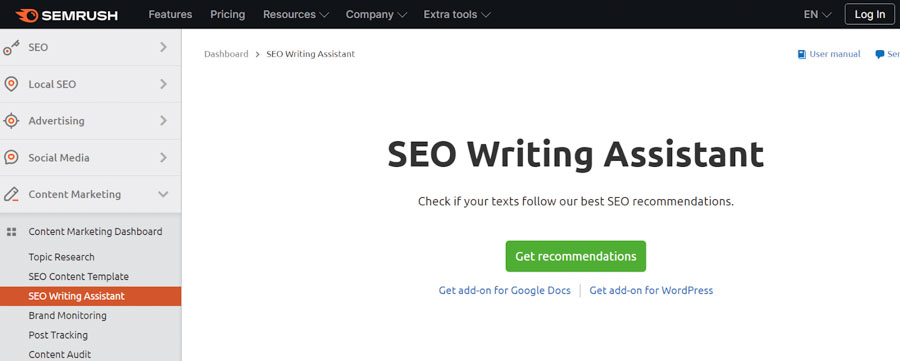
The SEMrush SEO Writing Assistant helps writers craft SEO-optimized content with live scoring for readability, tone, and keyword use.
You can enter your target and related keywords, and SEMrush evaluates your article based on:
- Readability level and sentence complexity
- Word count and reading time compared to top-ranking pages
- Tone of voice (Casual → Formal)
- Keyword relevance and usage
💡 Pro Tip:
SEMrush automatically suggests semantic keywords used by high-ranking competitors — boosting GEO visibility (Generative Engine Optimization) across AI Overviews.
It also detects plagiarism and recommends questions you can include in your article.
2. Yoast SEO (WordPress Plugin)
If you use WordPress, Yoast SEO is an essential free plugin that checks on-page SEO and readability before publishing.
It analyzes:
- Flesch Reading Ease score
- Use of passive vs. active voice
- Subheading distribution
- Paragraph and sentence length
- Transition words and sentence variety
With color-coded indicators (green = good, orange = needs improvement), Yoast makes optimization simple for both beginners and professionals.
3. SearchMetrics Content Experience

SearchMetrics goes far beyond simple keyword checks — it’s a data-driven content optimization platform.
It analyzes keyword density, structure, and contextual relevance to provide a Content Score.
You’ll also gain insights on user intent and the best publishing times during the year — giving you a calendar-based competitive advantage.
4. WebFX Readability Tool
The WebFX Readability Tool is perfect for writers focused on clarity and accessibility.
Instead of just one metric, it provides six different readability indexes, including Flesch-Kincaid, Gunning Fog, and SMOG.
It also calculates:
- Total words, sentences, and complex words
- Percentage of complex words
- Average sentence and word length
Use it to ensure your article matches the comprehension level of your audience — especially important for SEO content aimed at general readers.
You can refer here: How to Write SEO Optimized Articles by users & search engines highly ranked.
5. Text Optimizer
Text Optimizer analyzes the semantic structure of your article and identifies missing or irrelevant terms.
It acts like an AI co-writer that enhances topic relevance.
Key features include:
- Keyword gap detection
- Semantic word suggestions
- Optimization score based on search intent
If you’re new to semantic SEO, this is an excellent starting point for aligning your writing with how search engines interpret meaning.
6. Readability Analyzer
The Readability Analyzer focuses entirely on reading levels, using indexes like Flesch Reading Ease, Fog Scale, SMOG, and Fly Readability.
Unlike many tools, it scores not only your full article but also individual sections, helping editors and SEO writers optimize paragraph by paragraph.
7. Grammarly
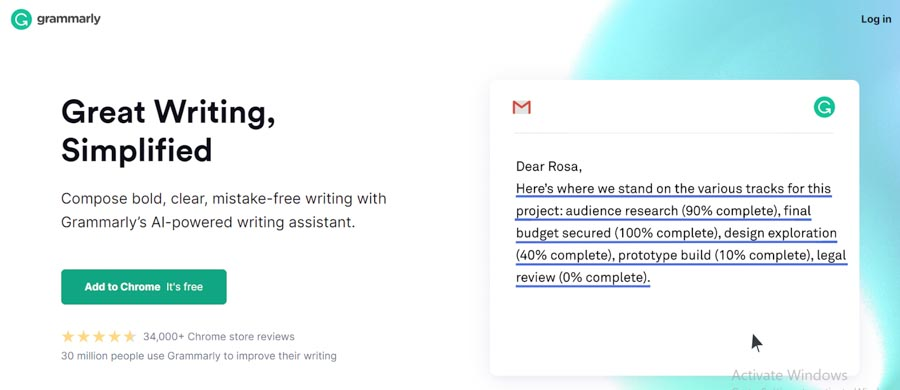
Grammarly improves writing quality through advanced grammar, tone, and clarity checks.
It flags overly complex sentences and ensures your text flows naturally — an essential factor for both user experience and SEO dwell time.
You can even set goals (audience, tone, domain, intent) so Grammarly adapts its suggestions for blog posts, emails, or business documents.
While it’s not a direct SEO tool, it elevates readability — a ranking signal often overlooked.
8. Hemingway App
The Hemingway App helps writers create bold, clear, and concise content.
Simply paste your text, and it highlights:
- Passive voice
- Complex or hard-to-read sentences
- Overused adverbs
- Simplification opportunities
It assigns a grade-level readability score and estimates reading time — great for maintaining engagement and reducing bounce rates.
9. Bulk SEO Tools

Formatting issues can silently harm your SEO.
Bulk SEO Tools fix common formatting errors — uppercase/lowercase problems, duplicate lines, or inconsistent spacing.
You can convert text into Title Case, Sentence Case, or Uppercase, clean excess line breaks, and even generate metadata snippets.
A small but mighty addition to your SEO toolkit.
10. Cliché Finder
Nothing kills reader trust faster than clichés.
Cliché Finder scans your article for overused phrases and highlights them in red.
By replacing these with fresh language, your writing feels authentic — boosting E-E-A-T (Experience, Expertise, Authoritativeness, Trustworthiness) in Google’s evaluation systems.
How to Choose the Right SEO Content Tool
If you’re a solo writer or blogger:
Start with Grammarly and Hemingway App to improve readability and clarity.
If you’re a content marketer or agency:
Combine SEMrush, Yoast, and Text Optimizer to cover every aspect — from keyword targeting to on-page SEO to semantic alignment.
For large-scale content teams:
Tools like SearchMetrics and WebFX provide enterprise-level analytics, allowing you to measure SEO performance at scale.
Optimizing content for SEO is no longer optional — it’s a survival skill.
These 10 SEO content checker tools give you the data and insights needed to produce content that’s not only enjoyable to read but also built to rank.
Start with one tool, master it, and then combine them into your SEO content workflow.
🚀 Pro Resource:
Want to fast-track your SEO growth?
Grab The Ultimate SEO Hub 2025 — a curated collection of tools, courses, and expert resources.
FAQ
What is an SEO content checker?
An SEO content checker analyzes your writing for readability, keyword optimization, and overall SEO health. It helps ensure your content aligns with search intent and best practices.
Which SEO content checker is best for beginners?
Yoast SEO and Grammarly are ideal for beginners thanks to their simplicity and real-time feedback.
What’s the difference between readability and SEO optimization?
Readability focuses on how easily users can understand your content, while SEO optimization ensures that content performs well in search rankings. Both are essential.
Can these tools improve AI visibility?
Yes. Tools like SEMrush and Text Optimizer help you include semantically relevant keywords, improving your chances of being cited in AI Overviews and Answer Engines.